CIPR

  • Home
  • About
    • People
      • Director
      • Academics
      • Current PhD students
  • Research
    • Visiting Indigenous Fellowship
    • Recent Publications
  • Publications
    • CIPR Policy Paper
    • CAEPR Archive
  • News & Events
  • Study with us
  • Contact us

Research Spotlight

  • Japan - Zenadth Kes Project
  • Market value for Indigenous Knowledge
  • Helping Spirits Stay Strong
  • Reparative Ways of Thinking
  • Community Driven Empowerment Through Mabu Liyan

Related Sites

  • ANU College of Arts & Social Sciences
  • Research School of Social Sciences
  • Australian National Internships Program

Administrator

Breadcrumb

HomeResearchPublicationsIndigenous Electoral Power In The 2022 Federal Election: A Geographic Snapshot of Latent Potential
Indigenous electoral power in the 2022 federal election: A geographic snapshot of latent potential
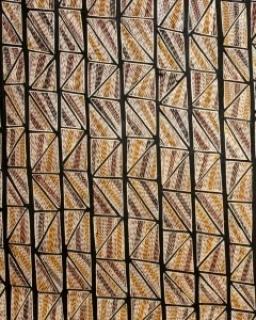
Terry Ngamandarra Wilson, Gulach (detail), painting on bark, private collection © Terry Ngamandarra, licensed by Viscopy, 2016
Author/editor: Markham, F. & Williamson, B.
Publisher: Centre for Aboriginal Economic Policy Research
Year published: 2022
Issue no.: 2
Page no.: 12 pages

Abstract

Comprising only 3.3% of the Australian population, Indigenous people are often assumed to have limited electoral power outside of the remote Northern Territory. This short paper reveals the geography of the Indigenous population focusing on federal electoral divisions where the Indigenous population is significant, not in absolute terms, but in relation to the vote margins in the 2019 federal election. It describes a geography of electoral divisions where the Indigenous population is large in comparison to electoral margins, including in divisions beyond remote Australia. It suggests that Indigenous communities could wield significant electoral power if they mobilised the large cohort of non-participating eligible Indigenous vote. This currently latent electoral power may assist Indigenous communities to lobby for policy changes.


File attachments

AttachmentSize
CAEPR_TI_2_2022_Markham_and_Williamson_0.pdf(839.31 KB)839.31 KB